Summary
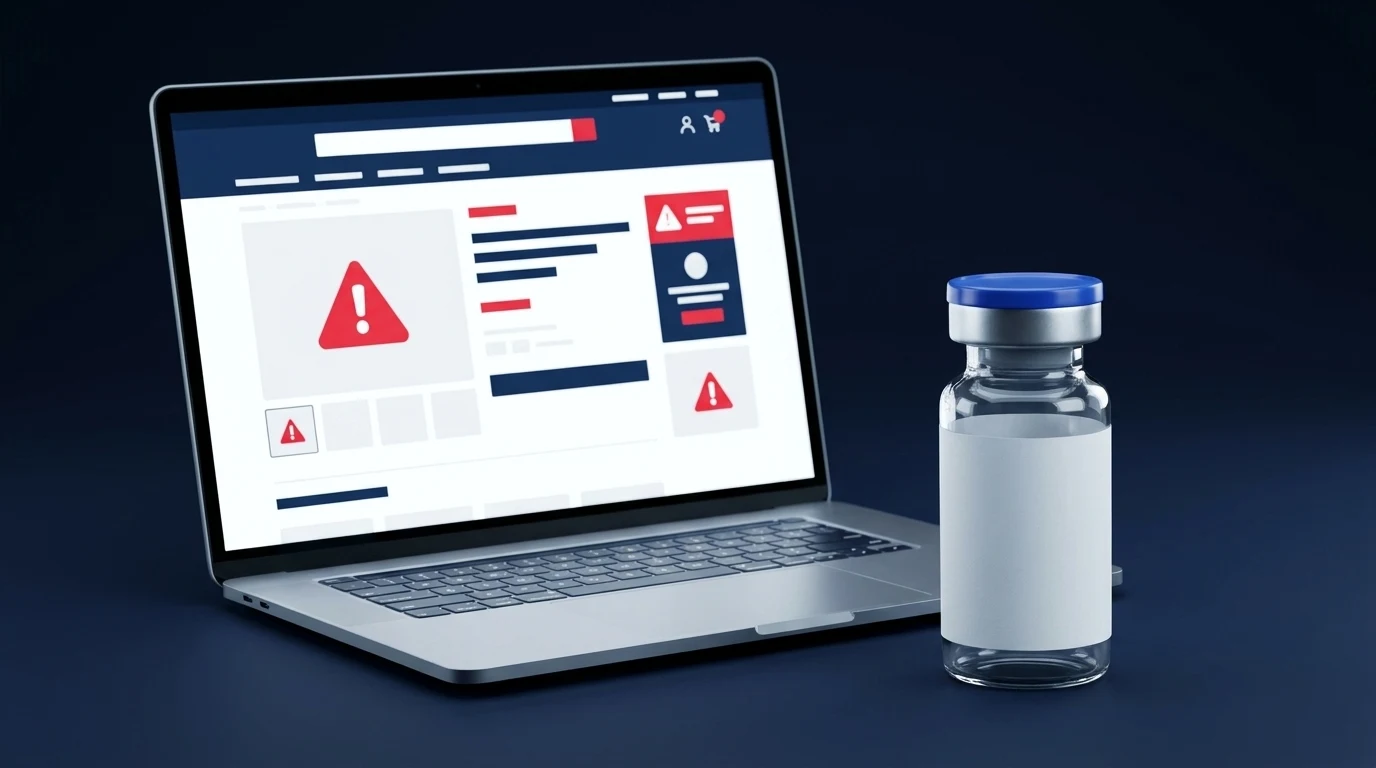
Most bad peptide listings fail in the same predictable ways. The faster you can spot them, the easier it is to avoid paying for a page that looks polished but says very little.
Section 1
What a trustworthy peptide product page should show right away
Key takeaway
A good peptide product page should reduce uncertainty fast. You should be able to identify the compound, quantity, format, storage basics, and the next supporting document without digging through tabs or hype-heavy copy.
That does not mean every page needs to feel clinical or dense. It means the important information should be obvious enough that a buyer can compare one listing against another in a few minutes instead of guessing from design cues alone.
- Compound name and short-name references that are consistent across the page
- Quantity and format shown clearly, not buried in an image or FAQ
- A visible path to documentation, support, or quality standards
- Research-use framing that stays consistent with the rest of the site
Section 2
Red flag 1: no batch-specific documentation path
Key takeaway
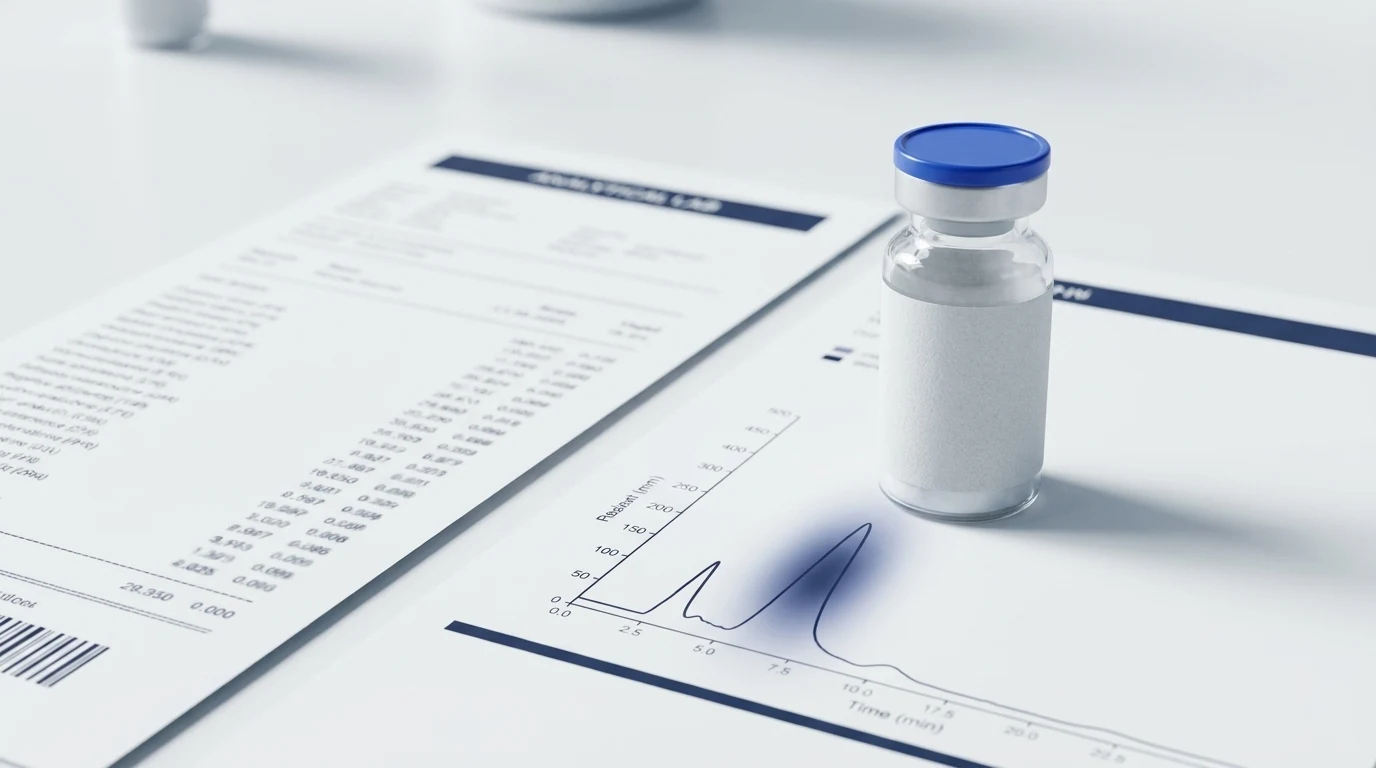
One of the easiest ways to lose confidence in a peptide product page is when the listing talks about quality but gives no clean path to a batch document or COA, lot reference, or supporting analytical context. Buyers do not need every document on the product page itself, but they do need a believable way to trace the claim back to something real.
Lot and batch identifiers matter because traceability is how quality systems stay useful once products move through handling, packaging, and support workflows. If a listing talks about testing but gives no lot-level anchor, the buyer is being asked to trust the headline more than the process behind it.
Section 3
Red flag 2: a purity percentage with no context
Key takeaway
A high purity number looks strong, but on its own it is not enough. A product page that pushes a percentage without any surrounding explanation is usually optimizing for impression, not evaluation.
What matters is whether that claim is tied to a real analytical process, a batch context, and a document path that helps the buyer compare more than one marketing line. A clean page does not just say the number. It shows how the buyer can place that number in context.
- No mention of how purity was assessed
- No lot or batch reference near the claim
- No nearby path to a COA or analytical summary
Section 4
Red flag 3: vague or missing storage guidance
Key takeaway
Storage is not a small detail for peptides. Light, heat, moisture, handling, and post-reconstitution conditions can all affect stability, so a page that says nothing about storage is leaving out information that materially changes confidence.
A good listing does not need to promise exact shelf life for every scenario. It should at least tell the buyer whether the site takes handling seriously and whether the support path covers clean storage basics without forcing them to guess.
Section 5
Red flag 4: unclear format or quantity
Key takeaway
If a buyer cannot immediately tell whether the product is lyophilized, reconstituted, blended, or sold in a specific vial quantity, the page is failing at the most basic level. These are the details that shape comparison, storage planning, and downstream expectations.
Strong product pages make quantity and format visible before the buyer has to scroll for reassurance. Weak pages turn basic product facts into a scavenger hunt.
Section 6
Red flag 5: aggressive health claims instead of research-use framing
Key takeaway
When a product page reads more like an outcomes ad than a research listing, that should slow you down. FDA warning letters to peptide sellers repeatedly focus on firms marketing peptide products with drug-like claims and disease-treatment language that the site cannot legally support.
That matters because the tone of a listing tells you what the seller is optimizing for. A restrained page that keeps research-use framing clear is usually easier to trust than one trying to sell certainty through promises.
Section 7
Red flag 6: no real support or policy path
Key takeaway
A product page does not stand alone. Buyers judge a site by how easily they can reach the FAQ, refund, shipping, research disclaimer, and quality pages from the product context.
If those pages are missing, hard to find, or obviously generic, trust drops even when the product card itself looks polished. Credibility is built by the surrounding support path, not just the main image and price box.
Section 8
Red flag 7: urgency and pricing that feel disconnected from the details
Key takeaway
Discounts, timers, and pressure tactics can be useful in ecommerce, but they become a problem when the page is doing more work to rush the decision than to support it. If the copy is loud about scarcity and quiet about storage, format, or documentation, that imbalance matters.
The better pattern is simple. Let the buyer see the specs, understand the support path, and decide without feeling dragged into an impulse purchase.
Section 9
A faster checklist before you buy
Key takeaway
A buyer does not need perfect information to make a better decision. They just need a repeatable way to compare pages using the same few trust signals each time.
The easiest way to avoid bad listings is to stop rewarding polish that hides the basics. If the page makes the real details hard to find, move on.
- Can you identify the compound, quantity, and format in seconds?
- Is there a believable path to batch or analytical support?
- Does the page stay restrained instead of making treatment-like promises?
- Are storage and support pages easy to reach before checkout?